
For years, the digital brand ecosystem was relatively predictable. A customer would discover a company through Google, social media, advertising or a recommendation. They would visit its website, explore its content, read reviews, perhaps follow the brand on social media, and eventually make contact or purchase.
That model is already changing. AI is not simply becoming another marketing channel. It is increasingly becoming the layer through which people discover, evaluate and interact with brands.
The first two shifts have already happened. The next ones are likely to fundamentally change what a brand touchpoint actually means. Here is what we believe happens next.
- Logo
- Website
- Social
- Search
- Advertising
- Content
- Salesperson
- Customer
- Brand identity
- AI interpretation
- AI recommendation
- AI interaction
- Human experience
01. AI has already become a new discovery layer
AI is no longer just a tool for generating content or answering questions. People are increasingly asking ChatGPT, Gemini, Perplexity and other AI systems questions they would previously have typed into Google.
- What's the best software for my business?
- Which agency should I use?
- What are the best options for...
- Compare these companies.
The traditional search journey began with a list of links. The emerging AI journey begins with an interpretation. That is a fundamental change.
A brand no longer has to simply appear in search results. It has to be understood by an intelligence that can interpret the question, assess the available information and formulate an answer.
The brand has entered the conversation.
02. AI recommendations are already becoming brand touchpoints
The next logical step has already begun: AI doesn't simply help people find information. It recommends what they should consider.
Instead of ten search results, a person might receive three recommendations. Instead of reading twenty reviews, they might receive an AI-generated assessment. Instead of researching a market themselves, they might ask an AI to shortlist the companies that best fit their requirements.
This means that a significant part of brand perception is increasingly being formed before a customer ever reaches the brand's website.
The question for brands is therefore changing. It is no longer simply "Will people find us?" It is "Will AI understand us well enough to recommend us?"
The answer to that question will increasingly shape how brands approach their digital presence.
03. AI agents will become another interface between brands and customers
This is where we believe the next major shift will happen. AI agents will increasingly move beyond answering questions and start doing things.
They will research, compare, qualify, recommend, schedule, purchase, book, configure, request quotes and potentially manage ongoing customer relationships. The distinction between discovery, sales, service and transaction will begin to blur.
A customer asks"Find me a branding agency that understands AI, has experience with established companies and can work internationally."
- 1Researches
- 2Compares
- 3Visits websites
- 4Assesses credentials
- 5Starts a conversation
- 6Arranges a call
The AI could identify suitable companies, compare them, visit their websites, assess their credentials, initiate a conversation and potentially arrange a call. At the same time, the brand itself may have an AI representative capable of responding, qualifying enquiries, explaining services and progressing the relationship.
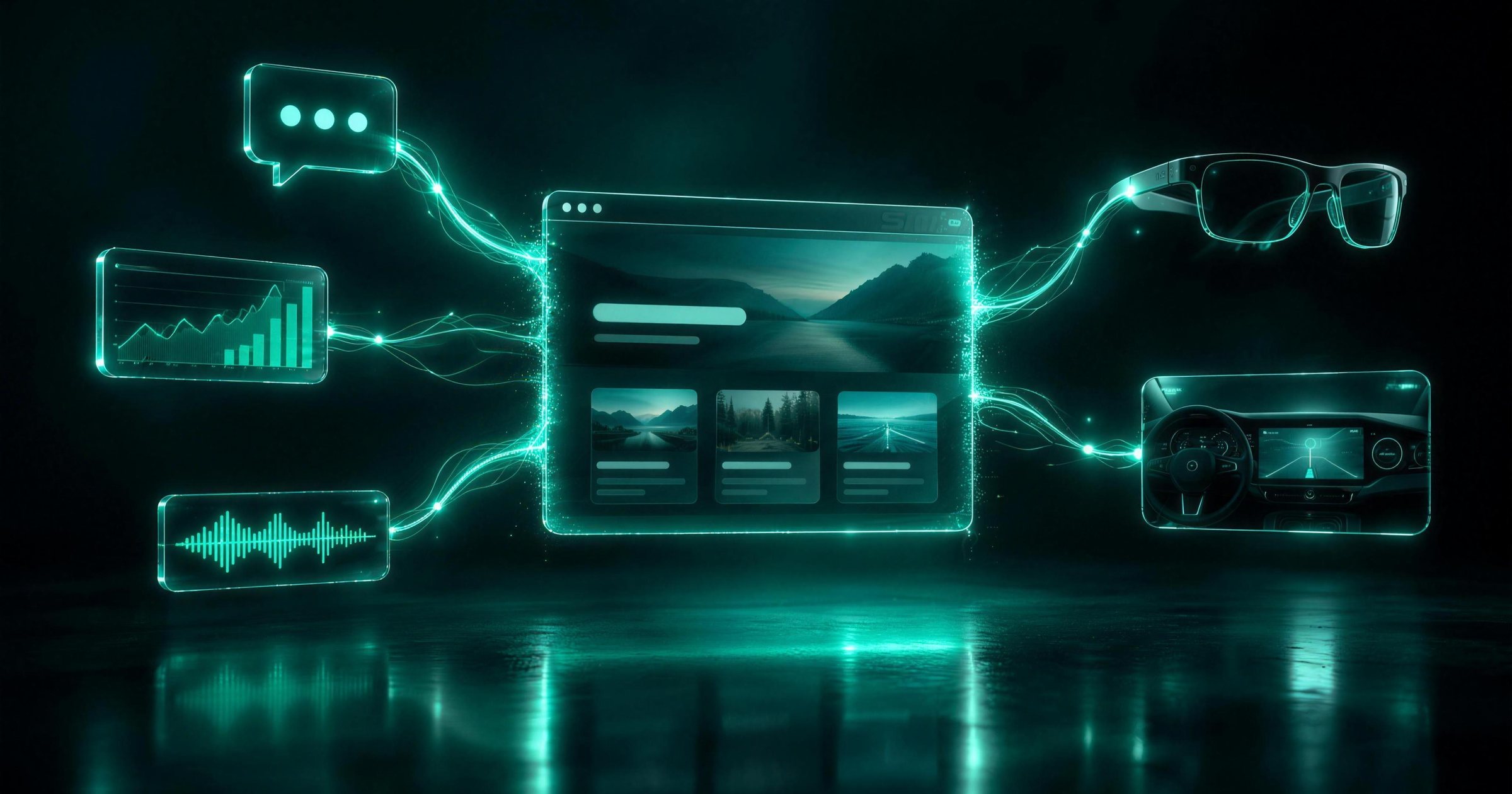
This also means that the brand will no longer exist in one digital location. It will exist across a network of AI interactions, conversational interfaces and agentic experiences.
And in the more radical version of this future, the customer may never even visit the brand's website. The website could become infrastructure behind the interaction rather than the interaction itself. We don't think that outcome is inevitable. But it is now a very real possibility.
04. Brands will need a machine-readable identity
This is perhaps the least visible but most important development. Brands have traditionally been designed primarily for human interpretation. We use language, visual identity, photography, positioning, tone and storytelling to communicate who we are.
Increasingly, brands also need to be understandable to machines. AI systems need to be able to establish:
- Who are you?
- What do you do?
- Who do you serve?
- What are you known for?
- Why should someone trust you?
- How are you different?
- What evidence supports those claims?
That means the future brand ecosystem will need a stronger underlying layer of structured information, authoritative content, consistent entities, reviews, expertise, references and evidence.
In other words, brands will increasingly have both a human identity and a machine identity. And they will need to agree with each other.
There is also a more radical possibility here: the brand itself could eventually become less visible than the AI representing it. Instead of interacting directly with a company's website, customers could interact with an AI agent that represents the company across multiple environments.
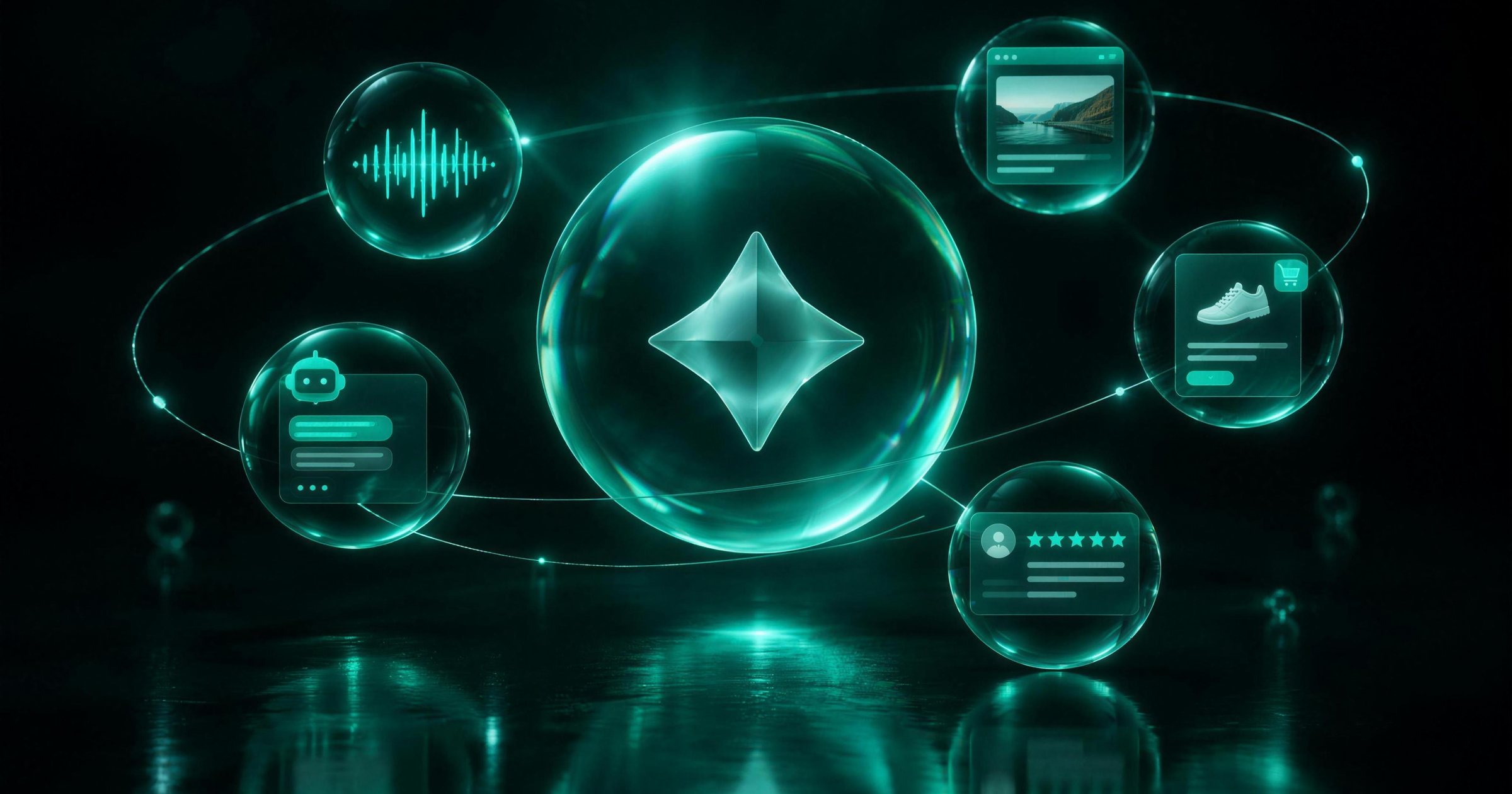
The brand may still be there. But its interface may no longer belong exclusively to the brand.
05. Experiences will become increasingly adaptive
Once AI can understand intent, context and individual preferences, the idea of a single, fixed digital experience starts to look increasingly outdated.
Today, most visitors experience broadly the same website. Tomorrow, websites, apps and digital experiences could increasingly adapt to the individual. The same brand could communicate differently with:
- a first-time visitor;
- an existing customer;
- a technical buyer;
- a CEO;
- someone researching a purchase;
- someone ready to buy.
The brand does not necessarily become inconsistent. Instead, its expression becomes adaptive while its underlying identity remains consistent.
This could eventually make personalization far more sophisticated than simply inserting someone's name into an email.
06. Reputation will increasingly become something AI interprets
Reviews, social content, press coverage, case studies, community discussions and customer experiences have always influenced reputation. What changes is how that information is consumed.
Instead of a prospective customer reading hundreds of reviews, an AI may summarize them. Instead of someone researching a company across ten websites, AI may synthesize what it finds and present a conclusion.
That makes reputation increasingly an AI-interpreted signal. And this is where the importance of genuine human experience becomes even greater.
If AI can synthesize thousands of signals, the underlying signals themselves matter. Real customers. Real experiences. Real products. Real people. Real expertise.
The brands that have something meaningful behind the marketing will have a significant advantage over those built primarily around generated content.
07. The human advantage will become more valuable, not less
This may ultimately be the great paradox of the AI era. As AI makes digital production faster, cheaper and more abundant, genuinely human qualities may become more valuable.
Taste. Judgement. Originality. Personality. Creativity. Trust. Experience. Human connection.
A world where almost anyone can produce a competent website, article, campaign, image or video will make competence less differentiated. The question becomes what exists beyond competence.
The strongest brands may therefore be those that use AI extensively without allowing AI to become their identity. AI can accelerate the work. It can analyse, generate, personalise and automate.
But there still needs to be something worth amplifying. Something human. Something distinctive. Something that cannot simply be replicated by generating another version.
- 01Human identityLogo, visual language, design, tone, personality, founder, values
- 02Machine identityStructured data, entity information, knowledge, content, authority, reputation, APIs, AI-readable information
- 03AI discoveryChatGPT, Gemini, Claude, Perplexity, AI search, recommendation engines
- 04AI representationBranded AI assistants, conversational agents, sales agents, support agents, personalized agents
- 05Adaptive experienceWebsites, apps, conversational interfaces, personalized journeys, dynamic content
- 06Agentic transactionBooking, purchasing, quoting, scheduling, negotiating, account management
- 07Human experiencePeople, physical environments, events, products, service, community
- 08Reputation loopReviews, social, press, communities, AI summaries, recommendations
And then the loop starts again.
What does this mean for established brands?
This is where we believe the opportunity lies. The brands most exposed to these changes aren't necessarily the startups building AI products. They are established businesses whose brand ecosystems were built for an earlier digital era.
They may have a good reputation, a strong product and years of expertise, but their digital presence may not reflect where the market is heading. Their website may have been designed for Google. Their content may have been designed for search. Their customer journeys may have been designed around forms and email. Their brand identity may have been designed primarily for human audiences. And their digital infrastructure may not have been designed for AI-mediated discovery, interaction and automation.
This is the transition we believe businesses now need to prepare for.
The next generation of brands won't just be designed for people. They'll be designed to be understood by machines, experienced by people, and represented by AI.
At Core Concepts, this is the space we are building toward. We help established brands evolve for an AI-mediated world, bringing together brand thinking, design, digital experiences, technology and AI to rethink how a business is understood, discovered and experienced.
Because the future of a brand isn't simply about having a better logo, a better website or adding an AI chatbot. It is about building a brand ecosystem that can operate across the increasingly complex relationship between people, technology and AI.
The brands that understand this early will not simply adapt to the next phase of digital. They will be built for it. If you want to know how your brand reads to people and to machines today, start with an audit or talk to us.