
The March 2024 Core Update from Google has set the digital marketing world abuzz, introducing significant shifts in how websites are ranked and evaluated. As Google continues to refine its algorithms, ensuring a high-quality user experience remains its north star. This latest update has profound implications for website owners and SEO professionals. Below, we delve into five critical aspects of the update, offering actionable advice to help you navigate these changes successfully.
1. Google's Zero-Tolerance Approach to Low-Quality Websites
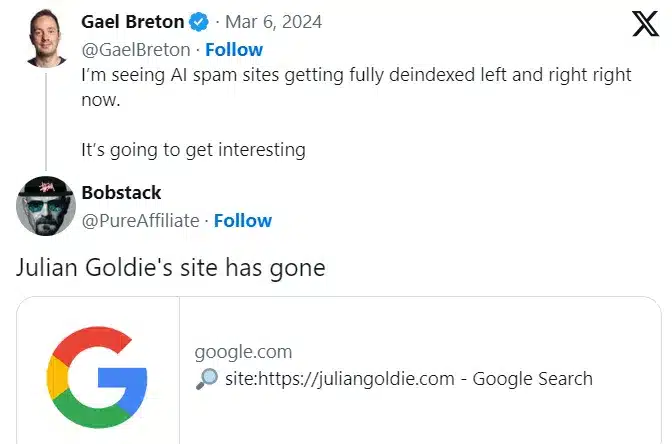
In an unprecedented move, Google is now fully deindexing websites that fail to meet its stringent quality criteria. This development signals a zero-tolerance policy towards sites that do not provide value to users or engage in manipulative SEO tactics.
Actionable Tip: Conduct a thorough audit of your site. Focus on enhancing the quality and relevance of your content while steering clear of black-hat SEO practices.
2. Swift Penalty Enforcement
The pace at which Google identifies and penalizes non-compliant websites has dramatically increased. Penalties are swift, leaving little room for error for site owners.
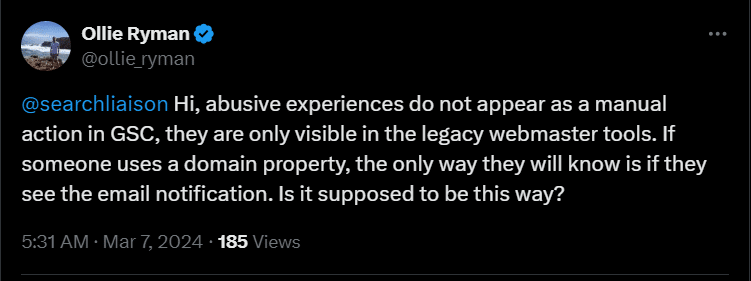
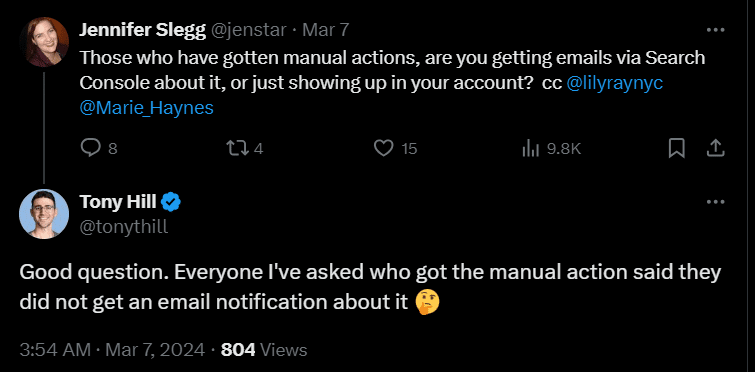
Actionable Tip: Regularly monitor your site’s compliance with Google’s Webmaster Guidelines. Implement corrective measures promptly to avoid potential penalties.
3. Past Performance No Guarantee of Future Success
Remarkably, websites that previously navigated updates unscathed are finding themselves vulnerable. This shift underscores the evolving nature of Google’s evaluation criteria.
This is one example of a “link-building agency” that got kicked out:
Actionable Tip: Adopt a mindset of continuous improvement. Stay abreast of SEO best practices and be prepared to adapt your strategies as necessary.
4. AI-Generated Content Under Scrutiny
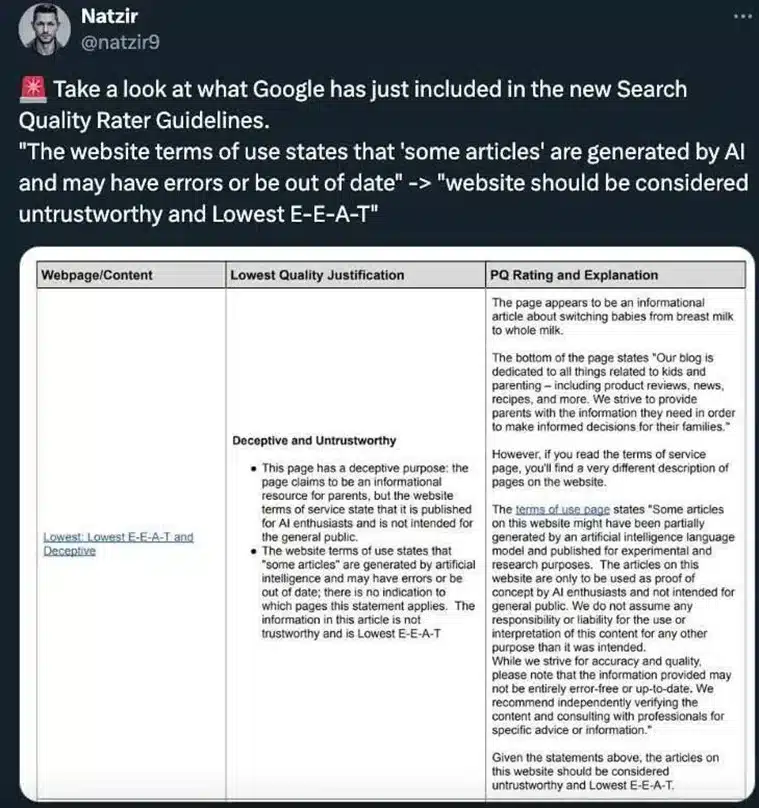
The update has cast a spotlight on small AI content sites, revealing that even these can suffer if the content does not meet Google’s quality standards.

But that is not the case here:

Actionable Tip: If using AI to generate content, ensure it is indistinguishable from human-written content in quality, accuracy, and value provided to the reader.
5. The Peril of Neglect: Outdated and Error-Ridden Sites at Risk
Websites plagued by outdated information, technical errors, and subpar user experiences are more vulnerable than ever.
Actionable Tip: Regular website maintenance is non-negotiable. Prioritize fixing broken links, updating content, and enhancing the overall user experience.
Takeaway: Quality trumps quantity
Google’s emphasis has always been on originality, depth and value for the reader. Websites that were removed and deindexed often relied heavily on thin or duplicated content without providing unique insights or perspectives.
To combat this issue head-on, improving E-E-A-T becomes essential. E-E-A-T principles show Google – and, more importantly, your readers – that you’re an authority worth listening to. This includes citing reputable sources within your niche and showcasing author expertise clearly on your site.
User experience also takes center stage with the latest algorithm changes. Your site should look good and be easy and intuitive for visitors. Websites focusing solely on keyword optimization instead of holistic UX design principles will be penalized.
Paying attention to page speed, mobile-friendliness and clear calls to action will help keep users engaged longer, sending positive signals back up the SEO food chain.
Remember, by making these adjustments, you’re not just playing nice with search engines; you’re building a better online space for everyone who visits.
Adapt or fall behind
The sheer number of de-indexed websites reported by the search marketing community confirms Google’s plan to implement a major shakeup in their ranking systems.
It is prudent to study the patterns of websites affected by algorithmic events to spot common trends so you can uncover your websites’ own weaknesses and recalibrate your strategies.
- Focus on content quality.
- Enhance user experience.
- Start auditing your site and make changes.
The road ahead might seem daunting, but remember, every step toward improvement is a step away from Google hell.
Has your website been hit by the March 2024 core update?
To check if your site was impacted by the Google update, use these methods:
- Search for your website on Google using “site:website.com” to check its presence in the search results.
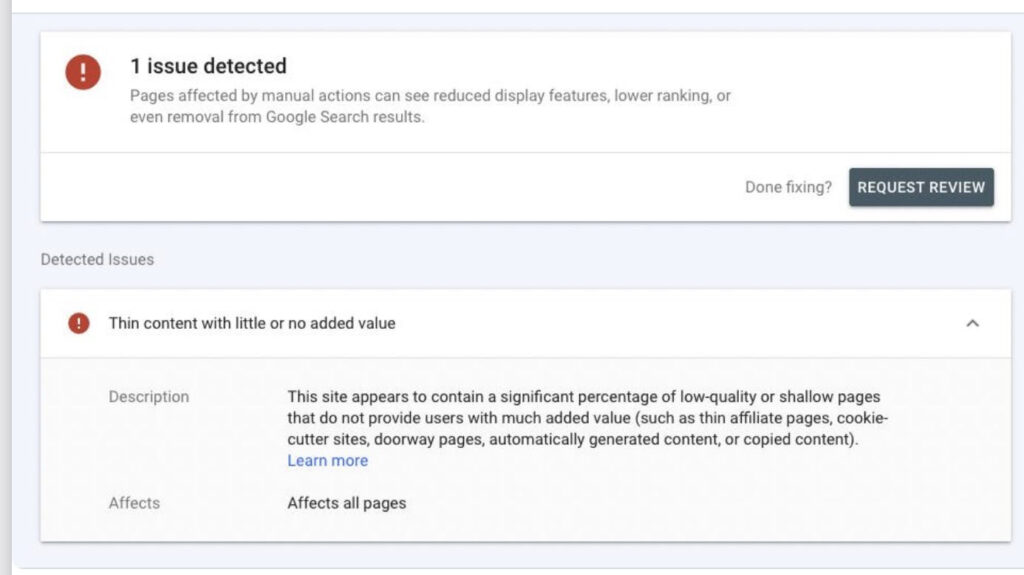
- Check Google Search Console for any ranking losses or spam alerts under “Checking Security & Manual Actions” in the left sidebar. if your entire website is affected by the manual penalty, you will face an error like this: