

We’ve all seen the ads: “Generate a professional website in 60 seconds with AI.” As a branding agency, we decided to put these tools to the test. We wanted to see if a small business owner could truly bypass the professional process using Wix ADI, Squarespace AI, or a ChatGPT-generated brief.
The results we found were visually surprising, but strategically hollow. AI can certainly build a website, but it cannot build a business asset. Here is exactly where the machine failed and what those gaps cost you in real-world revenue.
It Delivered Exactly What We Asked For (And That Was the Problem)
The fundamental difference between an AI tool and a strategic partner is the direction of the conversation. When you use AI, you are the pilot. The AI delivers only what you ask for. If you ask for a “modern website for a bakery,” it gives you a generic, modern bakery site.
As an agency, we are a strategic partner that moves with your brand. We don’t just take orders; we challenge them. We ask: “Why a bakery? Are you a high-volume wholesaler or a boutique wedding cake specialist?” AI won’t tell you that your request is missing the mark; it will just help you fail faster by automating your own blind spots.

Sight vs. Identification
AI is great at “sight.” It can generate a layout that looks like a website. But it fails miserably at “identification.”
Think of the Coca-Cola bottle. You don’t need to read the label to know what it is; you identify it by the red and black stripe and the curve of the glass. Branding is how your audience feels when they identify you—not just when they see you.
The AI-generated site we tested looked like every other competitor in the niche. It used the same stock photos and the same generic accents. It was visible, but it wasn’t identifiable. It lacked the unique brand signals that make a customer choose you over a cheaper alternative.

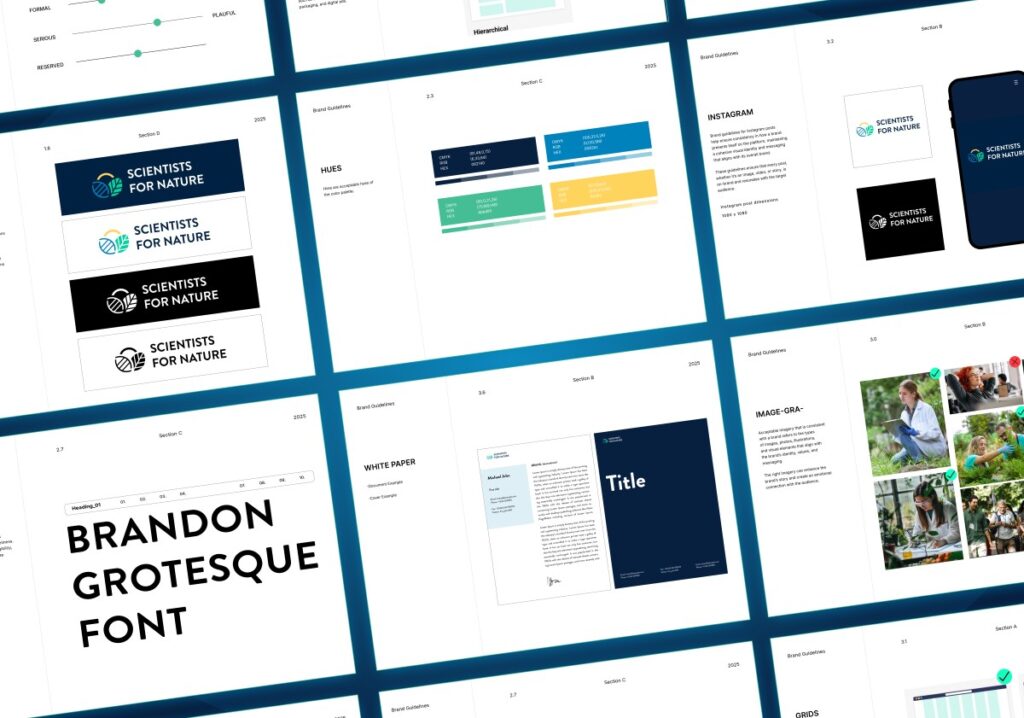
The "Representative" Logo vs. The Visual Face
The AI generated a logo that acted as a literal representative of the industry—a small icon of a building because we mentioned “real estate.”
In a successful brand, the logo is the visual face, not a literal representative. Your target audience should already know what you do and who you are before they even see your logo. Branding is the work that happens in the customer’s mind. The AI doesn’t understand your reputation or your “why.” It only understands pixels. We know you can’t create a visual face for a brand that hasn’t had its soul defined yet.
Zero Conversion Logic and "Dead End" Architecture
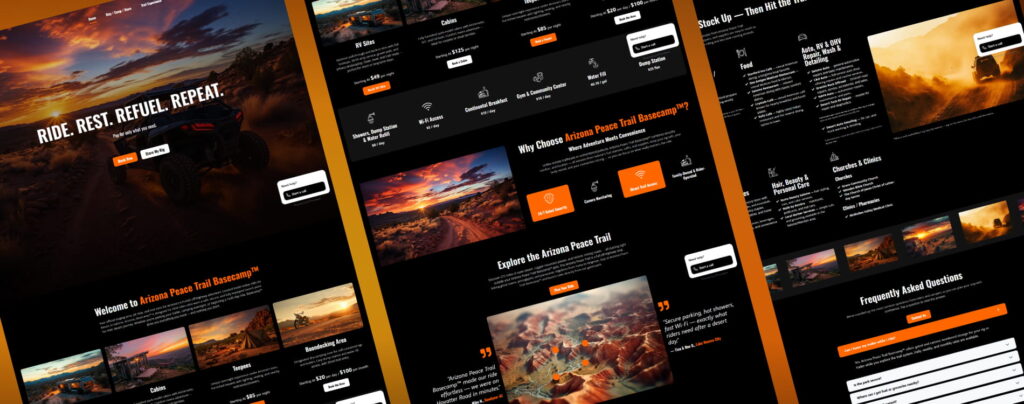
On the surface, the AI site looked clean. But when we looked at the Information Architecture (IA), it was a mess. There was no “customer journey.” It didn’t understand that a first-time visitor needs to see Value —> Trust —> Action.
It lacked:
Targeted SEO Signals: It missed the local nuances that actually bring in customers.
Conversion Psychology: The buttons were in the wrong places, and the copy was “we-centric” (we do this, we do that) instead of “customer-centric.”
Systemic Consistency: Branding is a unified system that includes marketing. The AI site felt like a collection of pages rather than a singular, cohesive experience.
The Bottom Line
AI is a tool, not a strategist. If your website is just a digital business card that doesn’t need to work for a living, AI is fine. But if you want your website to be your powerhouse, you need a partner who can guide you, not an “ad hoc employee” that follows prompts.
AI delivers a product. We deliver a solution. One costs you nothing upfront but costs you everything in lost opportunities. The other is an investment that ensures when people identify your brand, they know exactly why they should trust you.